

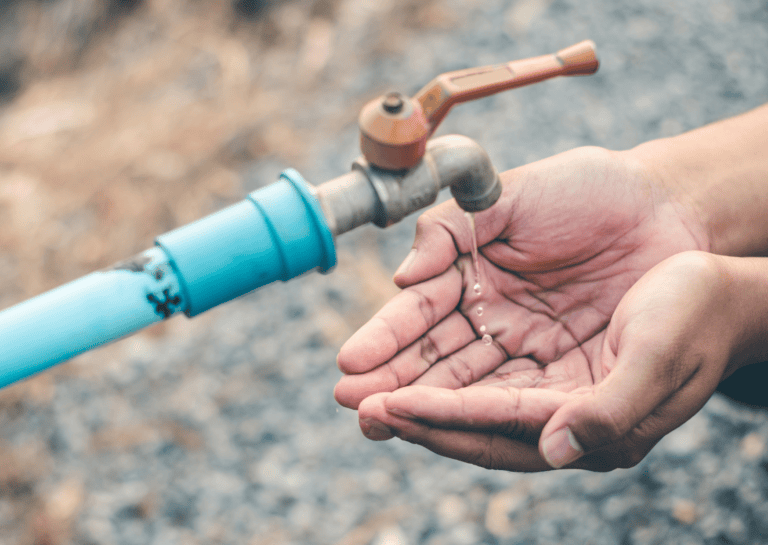
Fort Collins is asking homeowners to cut back on outdoor watering for only the second time since 2021, and the newly declared Fort Collins Water Shortage Watch is about real supply concerns this time, not just messaging. If you’re already dealing with sewer line repair coverage questions or a temperamental irrigation system, this is the year to get ahead of how a dry summer stresses everything connected to your home’s water and plumbing.
Quick Answer: Fort Collins Water Shortage Watch 2026
Fort Collins declared a voluntary Water Shortage Watch effective May 1, 2026, after an unusually dry winter left regional snowpack well below normal. The city is asking residents to limit lawn irrigation to two days a week and avoid watering between 10 a.m. and 6 p.m. It’s voluntary for now, with no penalties or rate changes, but city officials say early conservation could prevent mandatory restrictions later this year.
Why Fort Collins Declared a Water Shortage Watch
City Manager Kelly DiMartino signed the declaration under Fort Collins City Code and the city’s Water Shortage Action Plan, calling for “community-wide conservation,” according to North Forty News. The trigger was straightforward: an unusually dry winter left regional watersheds with historically low snowpack, creating a potential gap between water supply and summer demand.
City water conservation specialist Alice Conovitz put it plainly in comments to CBS Colorado: “We don’t do this very often,” she said, adding, “it is an extra dry year.” The city’s last voluntary watch was in 2021, but that one followed the Cameron Peak Fire contaminating parts of the water supply, a quality issue rather than a scarcity one. This time it’s purely about how much water is available.
Fort Collins isn’t sounding an alarm exactly. Officials believe current reserves, backed by senior water rights on the Poudre River and stored supply at Horsetooth Reservoir, can likely carry the city through 2026 without mandatory restrictions. But the message is that voluntary cutbacks now buy insurance against stricter rules later, especially if drought conditions or wildfire risk escalate.
That framing matters because voluntary appeals don’t always land. Conovitz noted that during the 2021 watch, many residents kept watering on their usual schedule because the concern at the time read as a water quality issue rather than a supply one, so the appeal didn’t feel urgent. This year’s messaging is built around actual availability, which is a different ask and, city officials hope, one that gets taken more seriously.
What the Water Shortage Watch Means for Fort Collins Plumbing and Cooling Systems
Outdoor Watering and Your Plumbing
The two-day watering schedule applies to turf irrigation, not drip systems for trees and shrubs, so established landscaping doesn’t have to go without. It’s also a good prompt to check hose bibs and irrigation lines for the kind of slow leaks that quietly inflate a water bill all summer. If your outdoor water use has you thinking about indoor costs too, Fort Collins plumbing repair costs tend to follow the same seasonal pattern: small problems ignored in a dry year often turn into bigger ones once the ground shifts again.
Dry Heat and Your Cooling System
A dry winter usually sets up a hot, dry summer, and that combination is hard on cooling equipment even if it has nothing to do with your water bill. Systems already running long hours in low humidity work harder to keep up, which is worth factoring in if you’re evaluating central AC performance in Colorado or considering whether mini-split systems in Colorado homes are a better fit for rooms that struggle to stay cool during stretches like this one.
What Most Coverage Misses About the Water Shortage Watch
Most coverage treats this as a lawn-watering story and stops there. What gets skipped is that enforcement isn’t uniform across Fort Collins. Some areas are served by Fort Collins Utilities, while others fall under the Fort Collins-Loveland Water District, a special district that legally cannot mandate restrictions the way the city can. That means two households on the same street could be operating under different rules depending on which provider serves their address, and most residents have no idea which one applies to them until they check a bill.
There’s also a plumbing angle nobody’s connecting to this. Extended dry stretches shrink and shift the soil around buried water and sewer lines, which is exactly the kind of ground movement that leads to cracked pipe joints later in the year. Questions about who’s responsible for sewer repairs tend to spike months after a dry summer, once shifted soil finally causes a line to fail, not during the drought itself.
The lag matters for homeowners specifically because it breaks the obvious cause-and-effect story. A slab leak or a sagging sewer line showing up in October doesn’t feel connected to a dry spell from June, so most people never make the link and end up treating it as a one-off repair instead of a predictable seasonal risk worth watching for.
Final Thoughts on the Fort Collins Water Shortage Watch 2026
The short version: Fort Collins wants voluntary cutbacks now so it doesn’t have to mandate them later, and that’s a reasonable ask given how dry this winter turned out to be. Whether or not you change your watering schedule, this is a good summer to get ahead of the plumbing and cooling stress that tends to show up after a dry year, not during it.
We’ve served Fort Collins for four generations, through drought years and everything else Northern Colorado weather has thrown at us. If you want a straight read on how your home’s systems are holding up this summer, contact us today and we’ll take a look.