

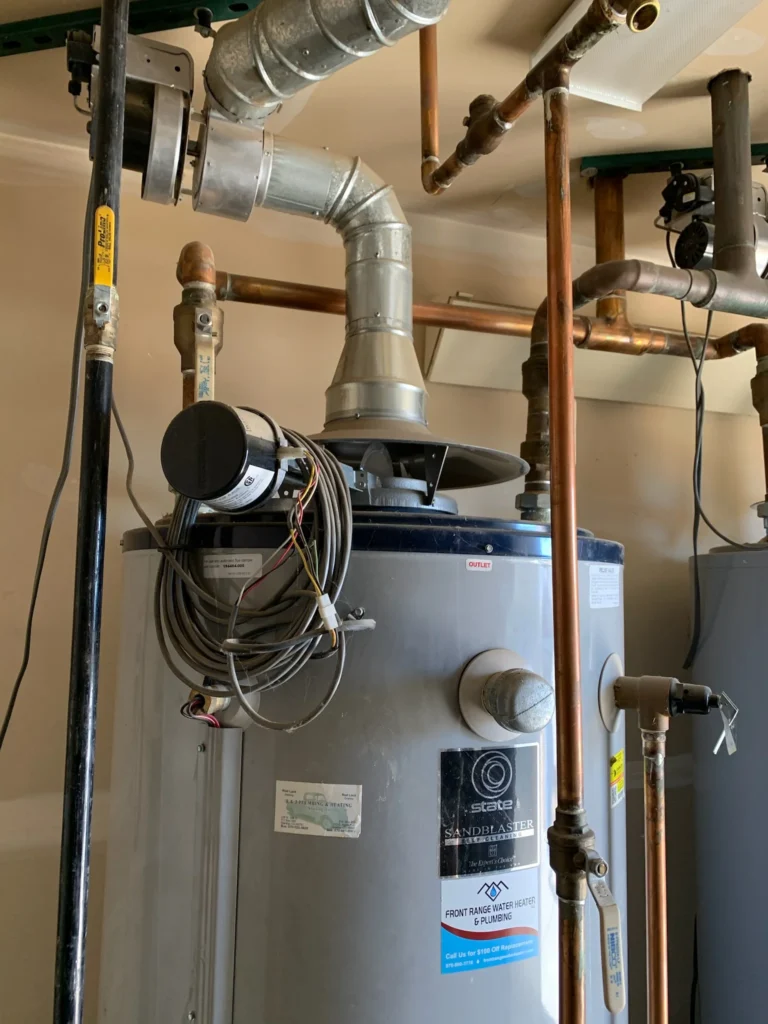
A water heater rarely fails on a convenient afternoon. It usually happens overnight, or right before guests arrive, which is exactly when homeowners start pricing out water heater replacement instead of comparing options first. Knowing what actually drives the cost before a technician walks in the door puts you in a stronger position to judge any quote you get.
Quick Answer: How Much Does Water Heater Replacement Cost?
Replacing a standard tank water heater typically runs $2,800 to $5,700 installed, depending on tank size, fuel type, and venting. Tankless replacement runs higher, often $6,800 to $7,800, because of the added gas line and venting work most homes need. Standard homeowners policies generally treat a worn-out unit as normal wear rather than a covered claim, so it’s worth checking your own policy before assuming a replacement is covered.
What Actually Changes the Price of a New Water Heater
Two water heaters that look identical on a spec sheet can carry very different installed price tags. The difference almost always comes down to what has to happen around the tank, not the tank itself.
Tank Size and Fuel Type
A 40-gallon electric tank costs less to install than a 50-gallon gas unit, mostly because gas models need proper venting and a gas line inspection before anything gets connected. Switching fuel types, say from electric to gas, adds cost for new gas lines and venting that didn’t exist before. Homes converting from a tank to a tankless system usually see the biggest jump in price, since tankless units often need a larger gas line, updated venting, and sometimes an electrical upgrade to run the unit’s controls.
Removal, Disposal, and Code Upgrades
Every replacement includes hauling away the old tank, and code requirements have changed enough over the decades that older installs frequently need updates during a swap: expansion tanks, updated shutoff valves, or drip pans in certain locations. None of that shows up on a “unit only” price, which is why comparing quotes line by line matters more than comparing bottom-line numbers.
Water heater replacement falls under the same broader category as most plumbing repairs: labor, part cost, and how much of the existing setup has to change to meet current code.
Tank vs. Tankless: Where the Money Really Goes
A tank unit heats and stores 40 to 50 gallons, ready the moment you turn the tap. A tankless unit heats water on demand, with no storage tank losing heat in the background between uses. Tankless costs more upfront, usually two to three times a standard tank installation, but it typically lasts longer (often 20 years versus 8 to 12 for a tank) and cuts standby energy loss year-round.
For a household replacing a unit that’s already near the end of its life, the tank-versus-tankless decision really comes down to how long you plan to stay in the home and whether the higher upfront number pencils out against lower operating costs over time. A family staying put for another 15 years gets more value out of that math than someone planning to sell in three.
Space and Venting Also Factor In
Tankless units mount on a wall and free up floor space, which matters in a small mechanical room or closet install. But they also need a dedicated vent run to the exterior, and if that run is long or has to pass through finished space, the labor to install it adds to the total faster than most homeowners expect going in.
How Long the Installation Actually Takes
A straightforward tank-to-tank swap, same fuel type and same location, usually finishes in half a day. Add a fuel conversion, a code upgrade, or a switch to tankless, and the job stretches to a full day or more, since gas line work, venting, and any electrical changes all add hours a simple swap doesn’t need. Homeowners comparing quotes should ask not just for a price, but for a time estimate. A number that seems low for the scope of work described is often missing a step that shows up as a change order once the technician is on site.
What Most Cost Guides Miss
Most articles on this topic stop at tank size and fuel type. Two other factors move the number just as much for homeowners in this area, and neither shows up in a typical price breakdown.
The first is water demand tied to local conditions. With Fort Collins under an ongoing water shortage watch, more homeowners are asking about recovery time and efficiency ratings rather than sticker price alone, since a tank that runs out of hot water mid-shower usually gets oversized on the next purchase to compensate, and a bigger tank means a bigger bill.
The second is timing. Replacing a failing water heater before it fails completely, rather than after a leak has already damaged flooring or drywall, keeps the job a straightforward swap instead of a swap plus a separate water damage repair. With this year’s water rate increase putting more pressure on households to fix leaks fast, a slow drip from an aging tank is worth addressing before it turns into a bigger bill on two fronts at once.
Getting a Straight Number on Water Heater Replacement
The real cost of water heater replacement depends on what’s already behind the wall, not just the price tag on the new unit. Tank size, fuel type, code updates, and how the old unit gets hauled away all factor into the final number, and any quote that skips those details is incomplete.
If your water heater is showing its age (rust at the base, inconsistent temperature, or a pilot light that won’t stay lit), don’t wait for a full failure to get a real number. Call us, and we’ll walk the install with you and account for everything, not just the tank. If it’s younger and just acting up, water heater repair may be all it needs.