

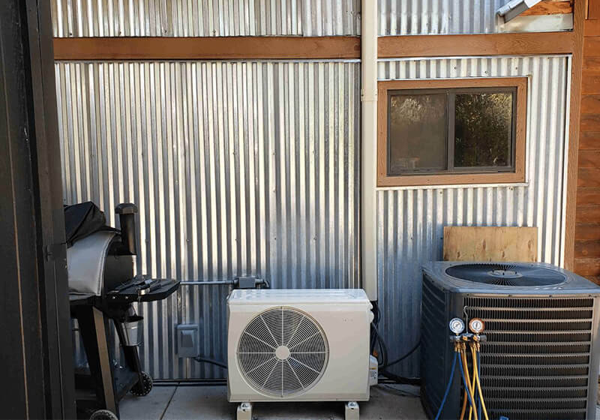
As more homeowners and business owners across Fort Collins and Northern Colorado look for energy-efficient heating and cooling solutions, heat pumps are quickly becoming one of the most discussed HVAC upgrades.
One of the most common questions we hear at Fort Collins Heating & Air Conditioning is:
“Should I choose an all-electric heat pump, or a dual fuel heat pump with a gas backup?” Learn about gas fireplace repairs and installations in Northern Colorado.
The answer depends on energy costs, comfort expectations, environmental goals, and how your building is used. This guide explains the difference between all-electric heat pumps and dual fuel heat pump systems, their pros and cons, and how to decide which option makes the most sense for your individual situation.
A heat pump uses refrigerant in an enclosed system to move heat energy from one place to another. This is how an air conditioner or refrigerator works. A heat pump has the ability to reverse the flow of refrigerant to change where the energy is moved (indoors or outdoors). In heating mode, it extracts heat from an outdoor source (air or water) and transfers it indoors. In cooling mode, it removes heat from inside and releases it outdoors.
Modern cold-climate heat pumps are designed to operate efficiently even in below-freezing temperatures, making them a viable option for Fort Collins, Loveland, Windsor, Timnath, Wellington, Berthoud, Johnstown, Severance, and Greeley.
Because outdoor air contains less heat during extreme cold, most heat pump systems include a backup heat source. That backup source is what separates all-electric systems from dual fuel systems.
The heat pump itself is the common thread in both systems.
The difference is how backup heat is provided when outdoor temperatures drop too low for the heat pump to carry the full load.
All-Electric Heat Pumps must rely 100% on electricity for heating, meaning the Heat Pump takes on the bulk of the load and relies on electric resistive heat strips for supplemental and back up heat.
Dual Fuel Heat Pumps are set up to be able to run either the Heat Pump or a gas furnace. Typically, the Heat Pump is set to be the primary source of heat down to an economic balance point determined by its capacity or fuel costs that determines when it is more economical to run on the heat pump or the gas furnace.
Yes. When properly designed and installed, cold-climate heat pumps work very well in Northern Colorado.
However, success depends on:
Not always.
While all-electric heat pumps are highly efficient:
Commercial buildings and light-industrial spaces can also benefit from heat pump technology depending on the application.
Some of those applications that may be a good fit are:
Yes. Cold-climate heat pumps are designed for low temperatures, with backup heat supporting performance during extreme cold snaps.
Yes, in most cases. Backup heat ensures that you stay comfortable during those extreme cold days in Colorado.
Yes. Propane is a common dual fuel option for homes without natural gas service.
Contractor expertise. Proper design, sizing, airflow, and controls matter more than the brand itself.
Some homeowners and business owners may qualify for state, utility, or federal incentives that reduce the cost of installing a heat pump system.
Rebates vary by system type and eligibility.
To explore potential savings, visit:
https://fortcollinsheating.com/rebates/
Choosing between an all-electric heat pump and a dual fuel heat pump is a major decision. Our experienced comfort consultants help Fort Collins-area homeowners and businesses design systems that balance efficiency, comfort, and long-term value.
If you’re considering a heat pump upgrade, we’re here to help you make the right choice for your home, your budget, and Northern Colorado’s climate.